Cat Mood Signals: How to Pet a Cat Safely
Learn how to pet a cat by reading three live feline mood signals—relaxed posture, tail thumping, and wide dilated pupils—then test your timing in Pet the Cat.
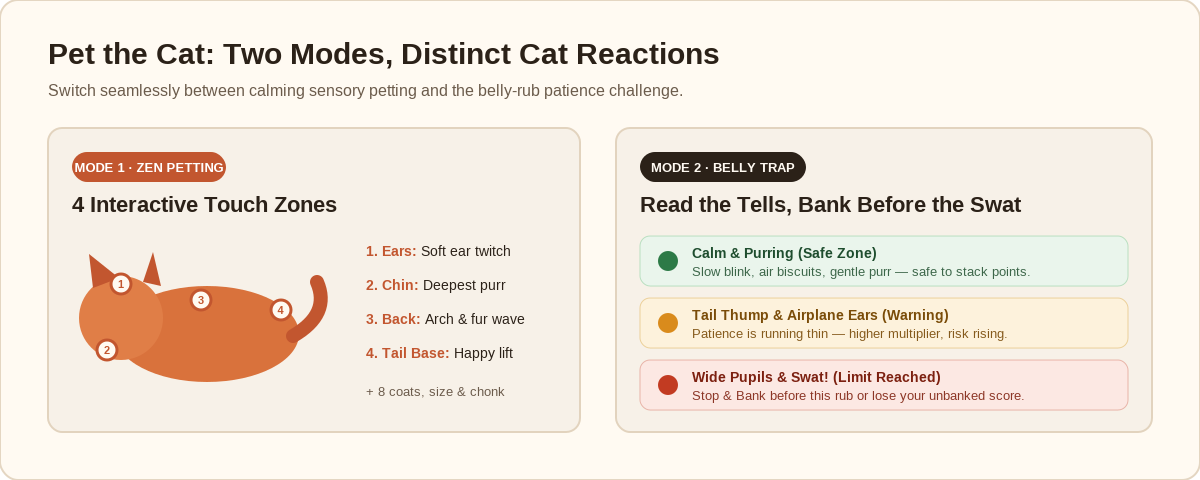
Knowing how to pet a cat comes down to reading subtle body language before overstimulation kicks in. Whether you are greeting a real house cat or testing your nerve in the Pet the Cat browser game, three live feline mood signals tell you almost everything you need to know about when to keep stroking and when to lift your hand.
Signal 1: Relaxed Posture, Soft Eyes, and Steady Purring
When a cat feels completely safe, its entire silhouette softens. The ears rest upright or tilted slightly forward, the eyelids droop halfway closed into slow blinks, and the paws stay loose or gently knead the blanket. If the cat rolls onto its side or exposes its belly while keeping this loose posture, it is showing trust—though not always inviting heavy rubbing.
- Best places to start: Most cats welcome short, gentle strokes around the chin, cheeks, and base of the ears, where scent glands make touch naturally soothing. Moving smoothly down the back works well once the cat leans into your palm, while light scratches near the tail base often trigger the playful "elevator butt" lift.
- Try it in the browser game: Open Pet the Cat in Zen Petting mode and glide gently across the chin, head, back, and tail base to watch how each zone changes the cat's posture and builds the live WebAudio purr meter.
Signal 2: Faster Tail Thumping and Flattened Ears
Cats rarely snap out of nowhere—they almost always warn you with their tail and ears first. A slow, lazy sway means contentment, but once the tail starts thumping rhythmically against the cushion or whipping side to side, patience is dropping fast. At the same time, the ears rotate backward or flatten sideways into classic "airplane ears" and the back skin may ripple slightly beneath your fingers.
- What to do right away: Pause your hand and let the cat decide whether to rub back against your knuckles. Pushing through a thumping tail is the fastest way to turn a calm cuddle into a defensive swat.
- Try it in the browser game: Switch to Belly Trap mode on Pet the Cat and stack a few rubs until the status shifts to Tail Thumping—that amber warning tells you only two or three safe rubs remain before the cat's hidden patience runs out.
Signal 3: Wide Dilated Pupils and Ready Paws
The final split-second warning before a swat happens in the eyes and paws. When a cat's pupils suddenly widen into dark, round circles, the head locks onto your hand, and the front paws curl upward with claws peeking out, the cat has crossed from mild annoyance into play-attack or self-defense mode.
- Why the belly is the classic trap: A cat's stomach protects vital organs and is packed with sensitive hair follicles. Even a cat that loves chin scratches can hit its sensory limit after just a few belly rubs. Lifting your hand the instant pupils dilate keeps both your fingers and your cat's trust intact.
- Try it in the browser game: In Belly Trap, reaching Wide Pupils · Risky means you are standing on the edge—click Stop & Bank (or press
Enter) right here to lock in your escalating points and reveal the exact hidden patience slots.
Quick Reference: Four Touch Zones vs. Belly Trap Escalation
- Chin & Cheeks (Fastest Purr): Short scritches build relaxation fastest in both real cats and Zen Petting.
- Head & Ears (Safe Greeting): Light strokes behind the ears keep a cat settled without overstimulating the spine.
- Back & Tail Base (Playful Lift): Long, unhurried strokes along the spine work best when the cat stays relaxed; watch for tail twitching if your cat is sensitive near the hips.
- Exposed Belly (High Risk): Always treat an upturned belly as a short-timer trust check. Read our cat petting simulator guide to explore all five photorealistic coats and soft-body fur physics, or jump straight back to Pet the Cat to test your timing on the sunlit cushion.